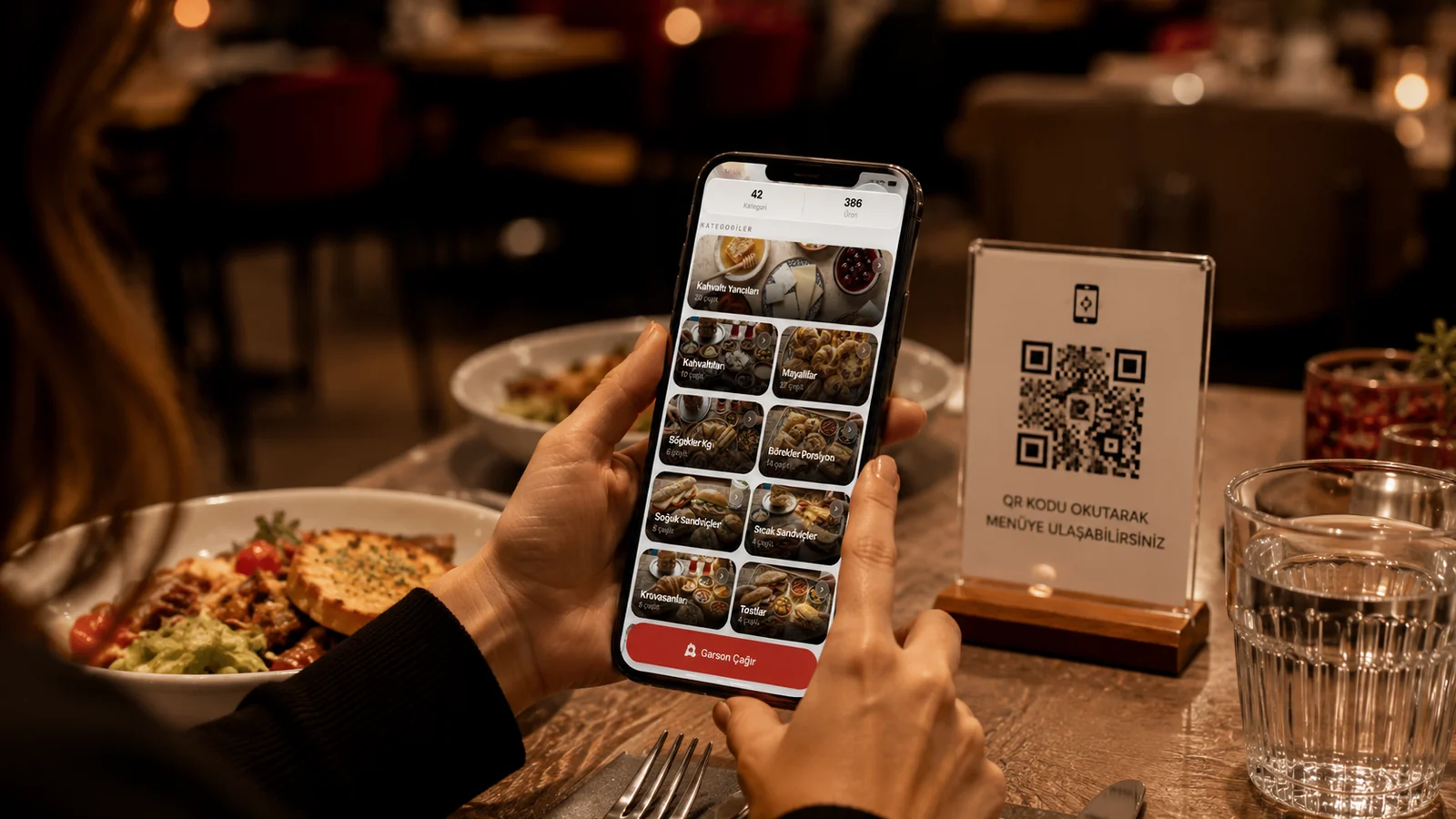
Orders drop straight onto the table's check — no re-entry.
When the guest scans the table QR code and submits their selection, the order is tied to that table and, once a waiter approves it, is posted automatically to the table's open check. The waiter no longer has to listen to each item and type it into the POS from scratch, which cuts manual entry errors and wrong-table mismatches. Because approved items are added to the check, every product appears on the same bill when it is time to pay.
Routes instantly to the kitchen screen/printer — prep starts sooner.
The moment the waiter approves the order, each item is routed to the matching kitchen printer or kitchen screen according to the preparation station the product is linked to. Drinks go to the bar and hot dishes to the kitchen, so the team sees the item without waiting for it to be re-entered into the POS and begins preparing. This shortens the prep-to-serve time after approval and keeps tickets from piling up on one person during rush hours.
Guests add more orders at their own pace; no waiting for a waiter.
When a guest decides mid-meal on a dessert or a second drink, they submit it themselves from the same QR code, and once the waiter approves it the items are added to the same check. Since there is no need to flag down a waiter and wait to give the order, add-on sales opportunities are not lost and the table flows at its own pace. As a result, extra orders move along without piling up while staff attend to other tables.
Integrated with waiter call — ordering and calls in one flow.
From the same QR menu screen the guest can both submit an order and, when needed, call a waiter to the table, so the two actions come together in a single flow. Because the waiter call reaches staff as a notification, the guest does not have to raise a hand and wait. Managing orders and service requests from one screen clarifies who needs what across the dining room and reduces confusion.